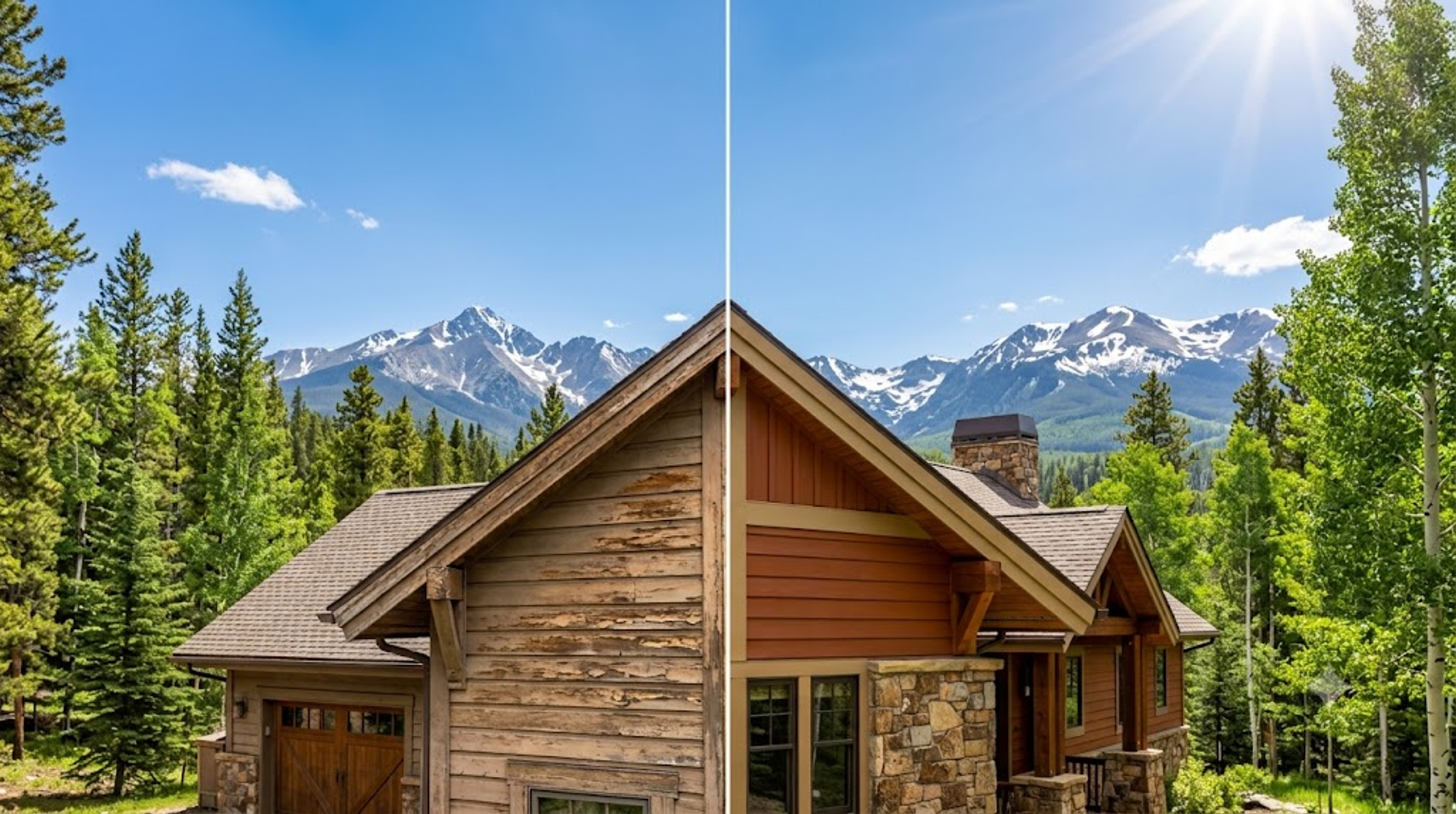
A well-painted exterior in Colorado typically holds up for 7 to 10 years on wood siding and 10 to 15 on fiber cement or properly primed stucco. But UV exposure at altitude, dry winters, and the freeze-thaw cycle we get from October through April can shorten that window fast if the last job wasn't done right.
The first signs are cosmetic: south- and west-facing walls fade first, especially in deeper colors that absorb more UV. If the color looks noticeably lighter than the north side of the same house, the paint film is thinning. It's not urgent, but it's a warning shot.
The next stage is chalking. Rub a clean hand along the siding — if it comes back with a light powdery residue, the binder in the paint has broken down and the pigment is releasing. At this point the film is losing its ability to shed water, and repainting within a year or two is smart.
The stage you don't want to reach is cracking, peeling, or exposed wood. Once bare substrate is showing, moisture is getting behind the paint every time it rains or the snow melts, and the damage compounds through every freeze-thaw cycle. Exposed wood should be primed within weeks, not months.
The best time to repaint an exterior in Colorado is late spring through early fall, when temperatures are consistently between 50 and 90°F and overnight lows stay above 40°F. We schedule most exterior projects between mid-May and mid-September for this reason — the finish cures properly and adhesion is at its best.
If you're not sure where your home falls on that timeline, request a free exterior walk-through. We'll tell you honestly whether you need paint this year, next year, or in three — and what prep the surface will need when the time comes.