Ask any professional painter what separates a finish that lasts a decade from one that peels in a season, and the answer is almost never the paint. It's the prep. Premium paint applied over a poorly prepared surface fails faster than mid-grade paint applied over a properly prepared one. Prep is where craftsmanship lives.
Real preparation starts with cleaning. Walls collect kitchen grease, hand oils, dust, and cobwebs — none of which paint bonds to. We wash surfaces with a degreaser, rinse, and let them dry fully before a brush ever touches them.
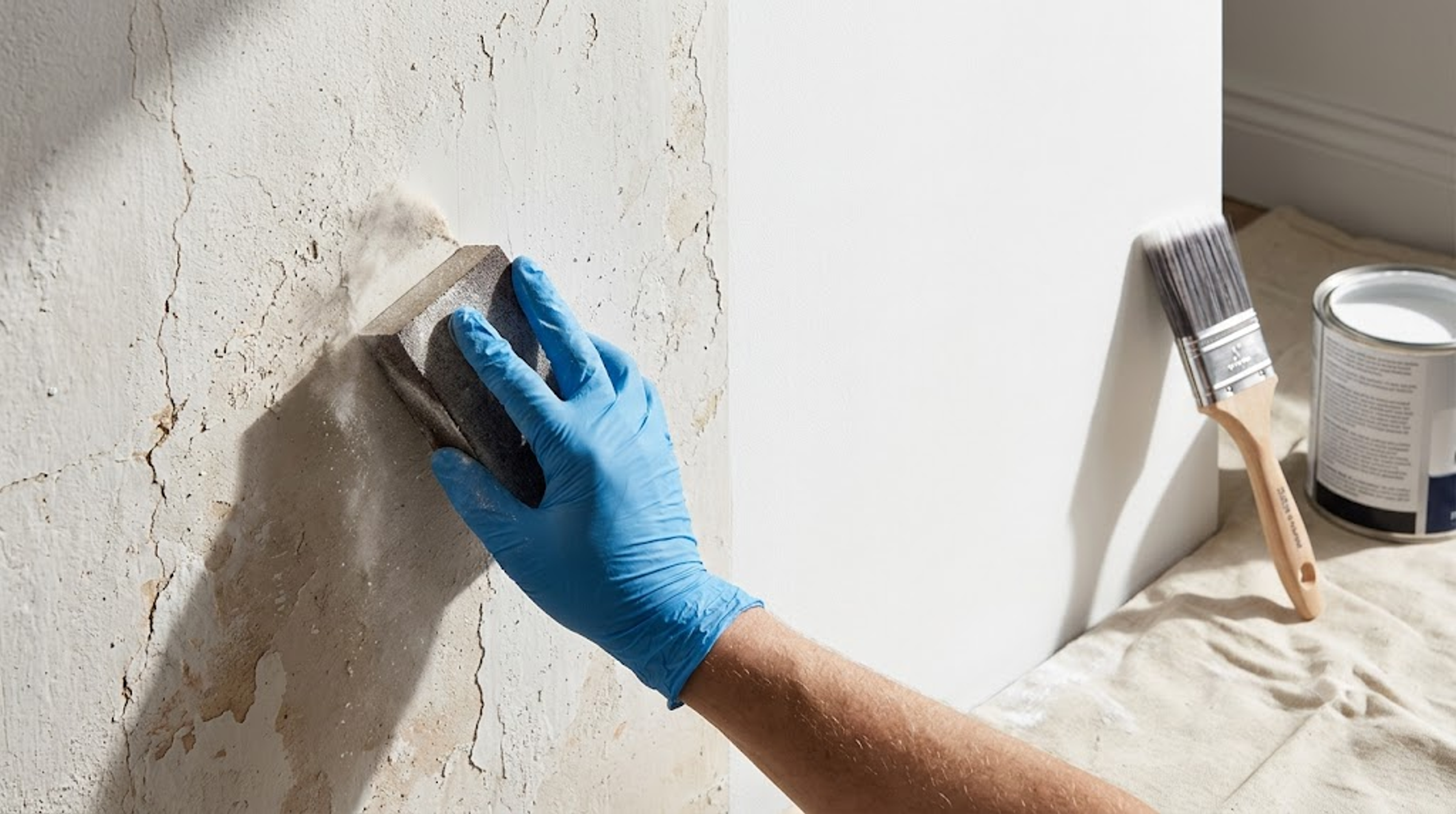
Next comes repair. Nail holes, hairline cracks, dented corners, tape lines from previous jobs — every flaw gets filled, sanded flush, and often primed on its own before the wall is coated. Skip this step and every imperfection telegraphs through the finish coat under raking light.
Sanding is what turns paint from a coating into a bond. A light 220-grit scuff gives the new paint a mechanical tooth to grip, especially on previously glossy surfaces like trim, cabinets, and older latex. This one step accounts for most premature peeling we're called to fix.
Finally, masking. Furniture wrapped, floors covered corner to corner, adjacent surfaces taped with proper painter's tape — not blue hardware-store tape — and sealed so paint can't creep underneath. Good masking is what makes lines razor-straight without a single touch-up.
None of this is glamorous. None of it shows up in the after photos. But it's why our finishes still look sharp five and ten years in — and why we tell every client the same thing: the paint is easy; the prep is the job.